


Residential LED Display Solution: From Information Dissemination to Smart Communities
As residential communities continue to expand, property management must convey an increasing volume of information. Notices regarding water and power outages, equipment maintenance, parking reminders, community events, and safety alerts all need to reach residents in a timely manner.
Traditional bulletin boards, paper notices, and WeChat groups remain common, but they suffer from slow updates, limited reach, and a tendency to be overlooked.
As a result, LED displays are increasingly being installed throughout residential communities. Experience has shown that digital bulletin boards can enhance the efficiency of information dissemination and boost resident engagement in residential communities.
Why do Residential Complexes Need LED Displays?
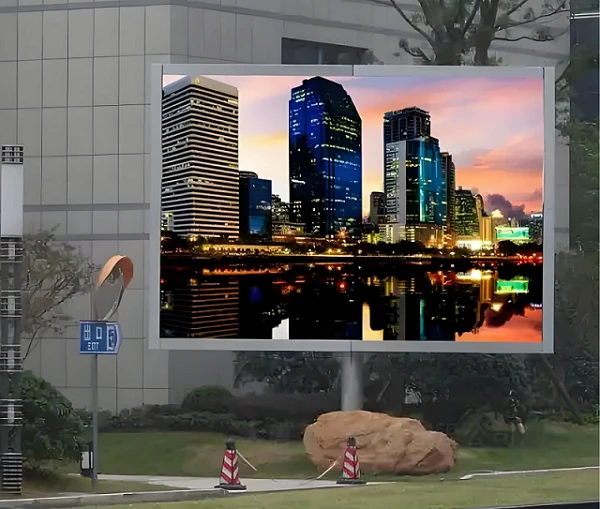
Information in residential areas is characterized by the need for frequent updates and rapid visibility. For example, a property manager may issue an elevator maintenance notice one day and have to remind residents of a fire drill the next day. Traditional paper newsletters require printing, posting, and distribution, as well as the replacement of old advertisements as information changes.
In contrast, LED displays allow for direct content updates. Property management can switch between text, images, and video content based on the situation at hand.
More importantly, residential complexes are high-traffic environments. Residents pass through areas like entrances, lobbies, and elevator halls every day. Installing display equipment in these locations ensures that information naturally integrates into the residents' daily routines.
Therefore, installing LED displays in residential complexes is not merely about showing advertisements; it is about establishing a more intuitive and effective way to communicate information.
How to Plan the LED display Solution for Residential Communities?
Residential area LED displays are not suitable for solving all problems with a type of screen. A more reasonable approach is to first determine the information dissemination requirements, and then select the equipment based on different areas.
At the same time, factors such as viewing distance, environmental brightness, and installation method need to be considered. For the property management, the screen is only a part of the entire plan. Content update, playback management, and later maintenance are also important. Only when the equipment, installation location, and content management are mutually matched can the LED display truly function.
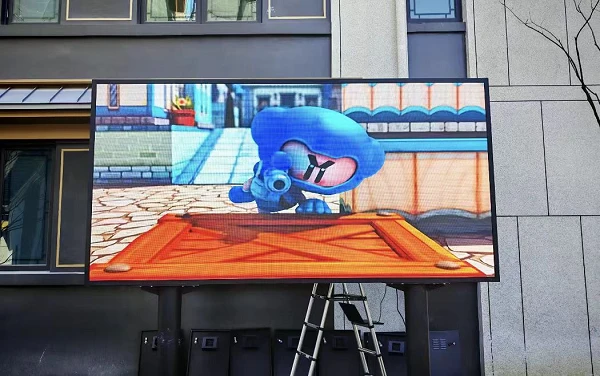
How to Choose LED Displays for Different Areas?
Display needs vary across residential communities. When selecting an LED display, planning should take into account the installation location, viewing distance, ambient brightness, and type of information.
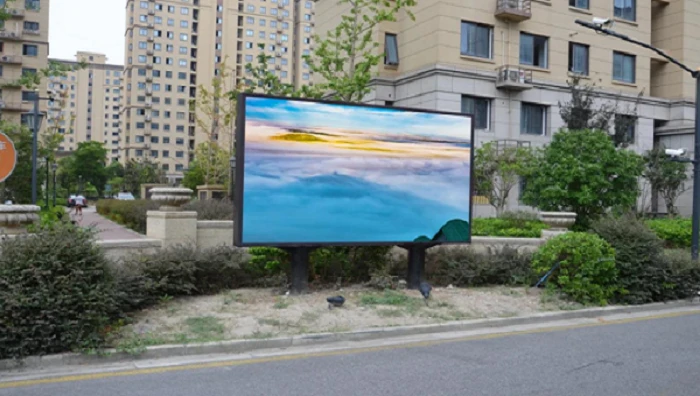
Community Entrance: Outdoor LED Display
The community entrance is the main access point for residents and visitors, as well as a key location for property management to post important information. An outdoor LED display is a suitable option here. It can be used for:
- Community event announcements
- Parking and vehicle reminders
- Property management announcements
- Holiday information and Safety alerts
- Weather or emergency information
Entrances are typically exposed to factors such as natural light, rain, and temperature fluctuations. Therefore, outdoor LED displays must be selected with appropriate protection ratings, brightness levels, and mounting structures based on the actual environment.
Screen size should not be the sole consideration. Design should take into account road width, viewing distance, and the direction of vehicle traffic. This ensures residents can clearly see the content without disrupting the overall environment of the entrance.
Lobbies and Elevator Halls: Indoor LED Displays
Lobbies and elevator halls are areas where people tend to linger, making them ideal for indoor LED displays, LED video walls, and fine pixel pitch LED displays.
These locations can display property announcements, community events, service information, and reminders regarding the use of common areas.
If the viewing distance is close, the display's pixel pitch requires special consideration. A smaller pixel pitch meets the needs of close-up viewing and also facilitates the display of text and detailed content.
For lobbies with limited space, custom LED display solutions can also be adopted. This allows for planning based on the dimensions of the wall, rather than simply applying display equipment of fixed sizes.
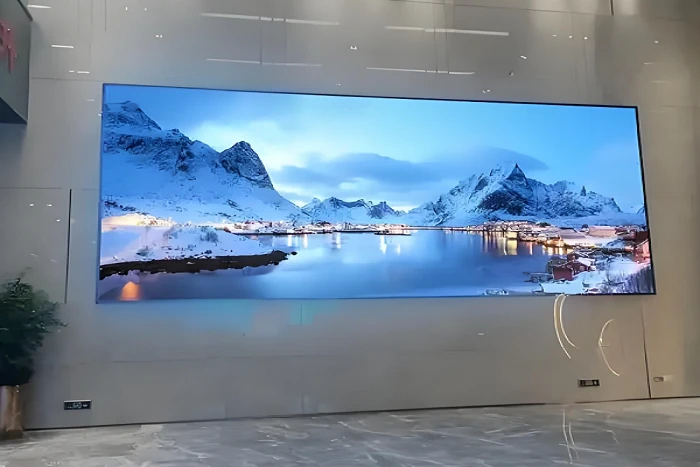

Clubhouses and Activity Rooms: Indoor LED Video Walls
Clubhouses, gyms, conference rooms, and multipurpose activity rooms in residential communities have more diverse display needs.
Products such as LED video walls and indoor LED displays can be used here.
For example, they can be used to display PowerPoint presentations and videos during community meetings; to play workout class content in the fitness area; and to broadcast promotional content for community events in activity rooms.
Compared to a simple bulletin board, an LED video wall can simultaneously serve as both an information display and a visual content player, making public spaces more versatile.
Community Plaza: Rental LED Displays
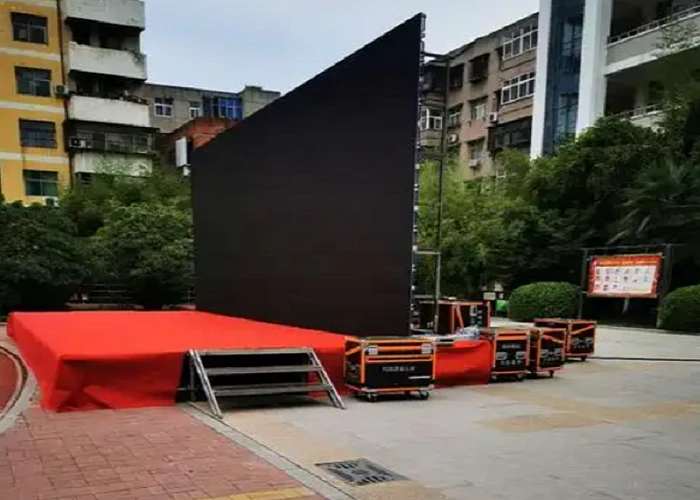
If a residential community frequently hosts holiday events, parent-child activities, cultural performances, and similar events, rental LED displays is worth considering. These displays are better suited for temporary events. After the event concludes, they can be dismantled or moved to other areas.
As a result, property management does not need to install permanent display facilities for every event. For residential communities with a high frequency of events, this approach improves equipment utilization.
What Can LED Displays Offer Residential Communities?
Application advantage
Faster Information Updates
Traditional notices require reprinting and reposting. With LED displays, content can be updated instantly. This method offers greater flexibility for information change.
01
Information Is More Visible
Residents may not actively check bulletin boards or read property management group messages every day. However, when entering the community, riding the elevator, or passing through the lobby, the display naturally comes into view.
02
Reduced Use of Paper Notices
A large number of temporary notices require repeated printing. Digital displays can reduce the use of paper and printing materials while also lowering the workload associated with manually posting and replacing notices.
03
Enhancing the Community's Aesthetic Appeal
Using appropriately sized LED displays at entrances or lobbies can create a more unified presentation of community information. For high-end residential projects, the display content and screen design can be tailored to harmonize with the architectural environment.
04
Support for a Wider Range of Information Formats
Paper notices primarily rely on text and images. However, LED displays can present text, images, animations, and videos. Property management can select the most appropriate presentation method based on the content.
05
Solution Summary
Installing LED displays in residential community is not merely about adding display equipment; it is about transforming the way information is communicated within the community.
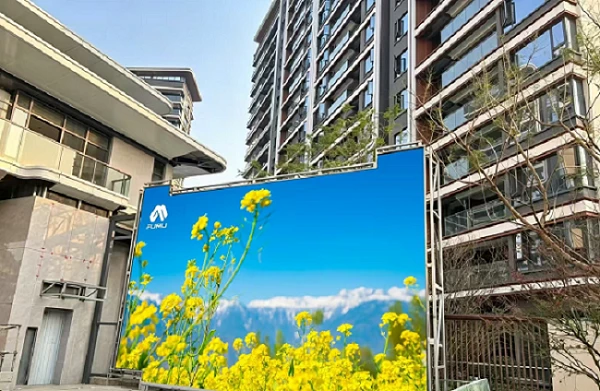
For property managers, LED displays enhance the efficiency of information updates, reduce the reliance on paper notices. For residents, the process of receiving information becomes more convenient and efficient, while their residential living experience is enriched.